

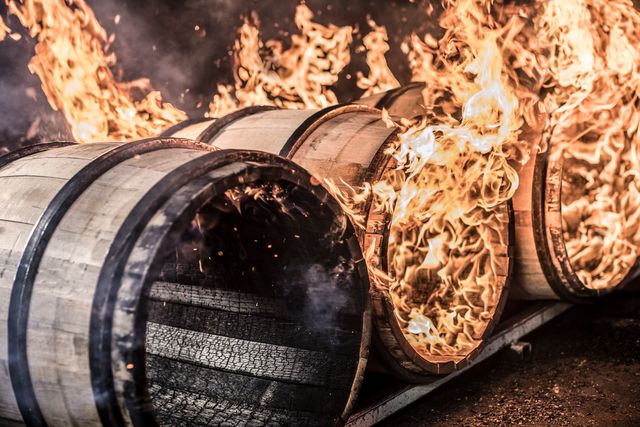
When a barrel is charred, several important changes occur at once.
Key effects of charring
The heat caramelizes natural sugars in the oak
A charcoal layer forms that filters harsh compounds
Wood compounds like vanillin and lignin become accessible
The barrel interior becomes more porous
This sets the stage for flavor extraction once the bourbon enters the barrel.
How Barrel Char Affects Bourbon Flavor
Barrel char influences bourbon in four major ways.
Sweetness
Heavier char breaks down more wood sugars, leading to stronger vanilla, caramel, and toffee notes.
Smoke and Spice
Deeper char introduces smoky, toasted, and sometimes peppery flavors depending on aging time and climate.
Mouthfeel
Charred barrels often produce a thicker, richer texture because more compounds are extracted into the spirit.
Balance Over Time
Char level determines how quickly bourbon absorbs oak influence. Too much char too fast can overpower the spirit.
Barrel Char Levels Explained
Most distilleries use four standard char levels. Each produces a different flavor profile.
Char Level 1
Light Char
This is the lightest char level and the least commonly used.
Typical flavor impact
Subtle vanilla
Light sweetness
Minimal smoke
Best for
Younger bourbon
Delicate profiles
Drinkers who prefer softer flavors
Char Level 2
Moderate Char
Char level two introduces more oak influence while keeping the spirit forward.
Typical flavor impact
Balanced vanilla
Light caramel
Gentle spice
Best for
Approachable sipping bourbon
Balanced cocktails
Char Level 3
Heavy Char
This is one of the most popular char levels in bourbon production.
Typical flavor impact
Caramel
Toasted oak
Baking spice
Richer mouthfeel
Best for
Neat pours
Classic bourbon flavor lovers
Char Level 4
Alligator Char
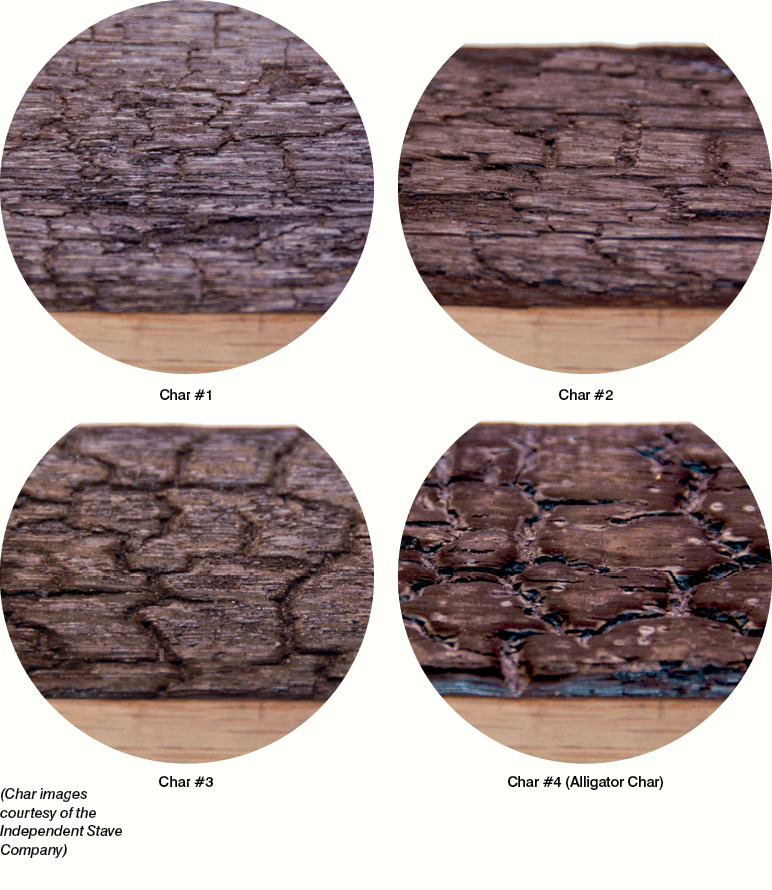

Char level four creates a cracked surface resembling alligator skin.
Typical flavor impact
Deep caramel
Vanilla
Smoke
Bold oak
Best for
High proof bourbon
Long aging
Drinkers who enjoy intensity
How Char Level and Age Work Together
Char and age must be considered together. A heavily charred barrel accelerates flavor extraction.
Examples
A four year bourbon with heavy char can taste richer than an eight year bourbon with light char
Long aging in heavy char barrels can lead to excessive oak and dryness
Short aging in light char barrels may produce thin or grain forward bourbon
There is no universally best char level. Balance matters more than extremes.
Best Barrel Char Levels for Beginners
Most beginners enjoy bourbon aged in char level three or four barrels that have not been aged too aggressively.
Why this works
Enough sweetness to be enjoyable
Oak presence without bitterness
Clear vanilla and caramel notes
Approachable mouthfeel
These char levels provide recognizable bourbon character without overwhelming the palate.
How to Explore Barrel Char Yourself
If you want to train your palate, do not overcomplicate it.
Simple ways to compare char influence
Try bourbons from the same distillery with different aging styles
Compare a younger bold bourbon to an older softer one
Pay attention to sweetness, smoke, and oak dryness
Keep notes simple. Focus on what you enjoy, not what you think you should enjoy.
Final Sip
Barrel char is not a minor production detail. It is one of the most important drivers of bourbon flavor.
Understanding char levels helps you avoid disappointment, choose bottles with confidence, and appreciate why two bourbons with similar stats can taste completely different.
The best bourbon is not defined by age or proof alone. It is defined by balance. Barrel char plays a major role in finding it.
0 comments